Short answer
Bone responds to load. Resistance training and impact place mechanical stress on bone that signals it to lay down more tissue — something walking and swimming largely do not do. Two to three progressively loaded sessions a week is the pattern most bone research is built on.
When women think about protecting their bones, supplements and dairy usually come to mind first. But there is another, often-overlooked tool that works directly on your skeleton: resistance training. Bone is living tissue, and like muscle, it responds to demand. Ask more of it, and it adapts by getting denser and stronger.
How Bone Responds to Load
Your bones are constantly being broken down and rebuilt in a process called remodeling. When you lift something heavy or your muscles pull hard against bone, that mechanical stress signals your body to lay down new bone tissue in the areas under strain. This is why weight-bearing and resistance exercise are so valuable, especially for women, who tend to reach peak bone mass earlier and lose it faster after menopause as estrogen declines.
The encouraging part is that it is never too late to start. Studies in postmenopausal women show that progressive strength training can help maintain and in some cases improve bone mineral density, while also reducing the risk of falls that lead to fractures.
What Actually Counts as Bone-Friendly Movement
You do not need to become a competitive powerlifter. The goal is to challenge your muscles and load your bones in ways everyday life rarely does. A few approaches work especially well:
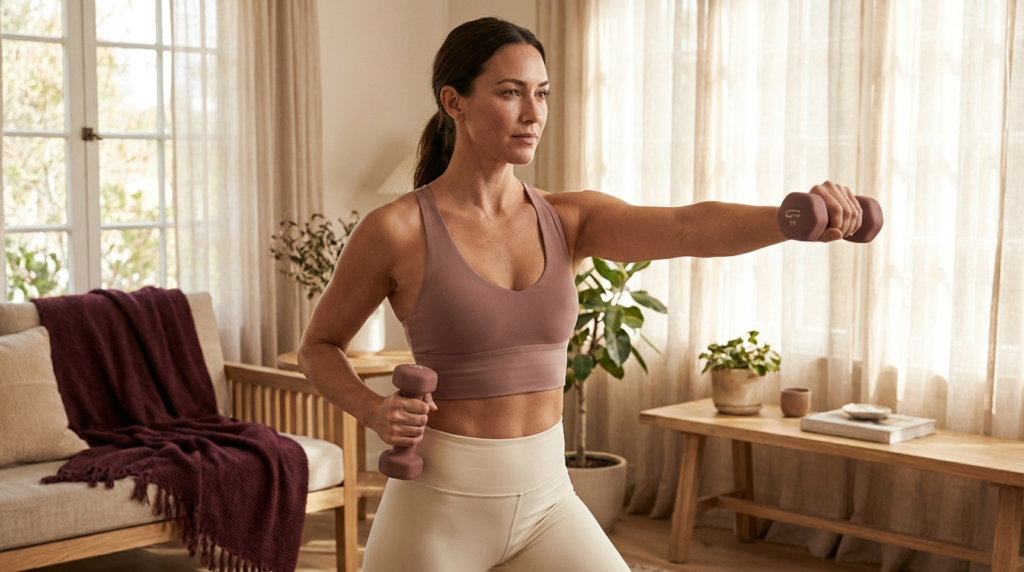
- Resistance training with dumbbells, resistance bands, or machines two to three times per week.
- Weight-bearing movement like brisk walking, hiking, dancing, or stair climbing.
- Compound exercises such as squats, lunges, rows, and presses that load the hips and spine.
- Balance work like single-leg stands or yoga to lower fall risk over time.
Consistency matters far more than intensity in the beginning. Starting light with good form and gradually adding resistance is what builds a habit you can keep for decades.
Why Nutrition Still Matters
Exercise gives your bones the signal to rebuild, but they also need raw materials to do it. Calcium is the headliner, yet it works best alongside vitamin D, which helps you absorb it, plus magnesium and zinc, which play supporting roles in bone metabolism. If your diet falls short on these, a thoughtfully formulated supplement can help fill the gaps so your training has something to build with. Quixao’s Osteo Bone Support pairs calcium with D3, magnesium, and zinc for exactly this reason: https://quixao.com/product/osteo-bone-support/
Putting It Together
Think of bone health as a partnership. Movement provides the stimulus, nutrition provides the building blocks, and time provides the results. You will not feel your bones getting stronger the way you feel a muscle burn, but the work compounds quietly in the background. A woman who strength trains in her forties and fifties is investing in the independence and mobility she will rely on in her seventies and beyond.
If you are new to lifting, consider a few sessions with a qualified trainer to learn proper form, and check with your healthcare provider before starting if you have any existing bone or joint concerns. Small, steady effort is the whole strategy.
These statements have not been evaluated by the FDA. This product is not intended to diagnose, treat, cure, or prevent any disease. Always talk to your healthcare provider before starting a new supplement.
More on this topic: Bones, Joints & Movement — 20 articles, each sourced.
Sources
This article is general information, not medical advice. See our editorial standards.